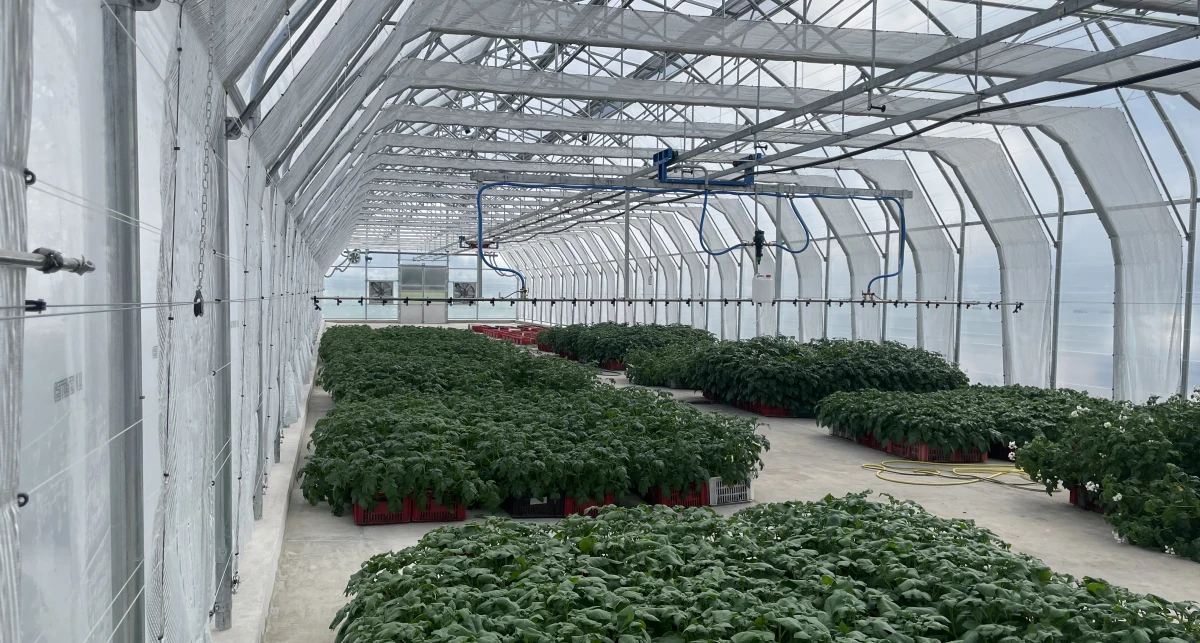
Sustainable solutions in choosing greenhouse irrigation systems
Sustainable Solutions for Choosing a Greenhouse Irrigation System
Choosing a greenhouse irrigation system is crucial to ensuring your plants have enough moisture and a bountiful harvest. When choosing a suitable irrigation system, there are several factors to consider, such as the size of your greenhouse, the type of plant, the water source, and your budget. There are different types of greenhouse irrigation systems available, so it is important to choose one that meets your individual needs, as well as being sustainable, environmentally friendly, and ecological.
There are different types of irrigation systems available, each with their own advantages and disadvantages. Some of the most popular types are:
1. Drip irrigation systems:
Working principle: Water is delivered directly to the roots of plants using drippers or pipes with small openings.
Advantages:
- Very efficient and economical, as it reduces water loss due to evaporation.
- Precise water delivery that provides optimal moisture to plants.
- Suitable for different types of plants, as the amount of water can be adjusted for each plant individually.
Disadvantages:
- Can be expensive to install.
- Can clog if the water contains a lot of impurities.
- Requires regular maintenance.
2. Sprinkler systems:
Operating principle: Water is sprayed over the plants using sprinklers or rotors.
Advantages:
- Suitable for larger areas.
- Ensures even water distribution.
- Relatively inexpensive to install.
Disadvantages:
- Higher water loss due to evaporation.
- May promote the spread of diseases if plant leaves are constantly wet.
- Not suitable for all types of plants.
3. Misting systems:
Operating principle: Water is sprayed in the form of a fine mist, which humidifies the air and plants.
Advantages:
- Ideal for plants that love humid air, such as orchids or tropical plants.
- Can help reduce the temperature in the greenhouse during hot weather.
Disadvantages:
- Can be expensive to install and operate.
- Requires precise control to prevent excessive humidity, which can promote the spread of diseases.
4. Capillary irrigation systems:
Working principle: Water is delivered to the roots of the plants using the capillary effect.
Advantages:
- Efficient and economical.
- Suitable for small greenhouses or individual plants.
Disadvantages:
- Not suitable for large areas.
- Can be difficult to control the amount of water.
5. Ebb and flow systems:
Working principle: Plants are placed in containers that are periodically filled with water and then emptied.
Advantages:
- Efficient and economical.
- Suitable for a variety of plant types.
Disadvantages:
- Can be expensive to install.
- Requires precise control to prevent excessive moisture or dryness.
Additional factors to consider:
- Water source: Make sure there is a sufficient water source available to support the chosen irrigation system.
- Water quality: If the water contains a lot of impurities, it may be necessary to use filters or other purification methods.
- Automation: Many irrigation systems can be automated using timers or controllers, which can save time and effort.
Professional and industrial greenhouses usually use more sophisticated irrigation systems that are tailored to specific conditions and crops. Such greenhouses often use drip irrigation systems or sprinkler systems equipped with sensors that monitor humidity levels and temperature.
Watering rods are an effective and convenient way to provide plants with sufficient water in the greenhouse. They are especially useful in larger greenhouses or when there is a large volume of plants that need to be watered regularly.
How do watering rods work?
Watering rods system consists of pipes that are placed above or near plants. Water is delivered through these pipes and sprayed onto the plants or their roots. Sprinklers can be equipped with a variety of sprinklers or drippers, which provide uniform and efficient watering.
Advantages of watering rods:
- Efficiency: Watering rods provide a uniform and precise water supply, reducing water loss and ensuring that each plant receives enough water.
- Time saving: Watering rods automate the watering process, saving you time and effort.
- Adaptability: Watering rods can be adapted to different plants and their needs by changing the type and placement of sprinklers or drippers.
- Easy installation: Watering rods systems are usually easy to install and use.
Types of watering rods:
There are various types of watering rods available, including:
- Spray rods: These rods spray water in fine droplets, providing even watering over the entire area.
- Drip rods: These rods deliver water directly to the roots of the plants, reducing water loss and promoting healthy plant growth.
- Combination rods: These rods combine the functions of spraying and dripping, offering a flexible watering solution.
Sustainability and ecological solutions
Today, there is an increasing focus on sustainability and ecological solutions. Greenhouse irrigation systems can also be sustainable if they use water-saving technologies and renewable energy sources. For example, collecting rainwater and using it for watering is one way to reduce water consumption.
Rainwater harvesting for greenhouses: a green and economical solution
Water is one of the most important resources needed for successful crop production. The increasing scarcity of water and high water prices are forcing us to look for alternative solutions. One of them is the collection and use of rainwater in greenhouses. Such a system not only saves on water bills, but also promotes sustainable agriculture.
Why is rainwater so valuable in greenhouses?
- Natural water that ensures higher crop quality: Rainwater is soft and does not contain harmful impurities that can be present in tap water. It is ideal for plants.
- Cost savings: By collecting rainwater, the need for expensive irrigation water is reduced.
- Sustainability: Pressure on local water resources is reduced.
Rainwater harvesting systems – how do they work?
The system is based on a rainwater tank, which collects rainwater drained from the roof. To prevent pollution, special filters are installed in the gutters. The water from the tank is pumped to the irrigation system. To ensure higher water quality, various filtration methods are used, such as mechanical, biological and chemical.
Using rainwater in irrigation systems
The collected rainwater is used for various irrigation methods, such as drip, fogging or irrigation. Automated irrigation systems allow for precise dosing of water and adjustment of the irrigation schedule to the needs of specific plants.
Specifics of professional greenhouses
In large greenhouses, rainwater harvesting systems must be designed and installed with particular care. The size of the greenhouse, the type of plants and climatic conditions must be taken into account. The system must be integrated with the greenhouse’s heating and ventilation systems.
Practical tips
- System sizing: It is important to correctly calculate the required tank volume, taking into account the size of the greenhouse and the average rainfall.
- Material selection: Tanks and pipes should be made of durable and environmentally friendly materials.
- Installation nuances: The system must be installed correctly to ensure efficient operation and longevity.
- Maintenance: Regular tank cleaning, filter replacement and system testing are necessary to ensure its operation.
Rainwater harvesting systems are an effective and sustainable solution in greenhouses. They allow you to save on water bills, improve plant growth and reduce environmental impact. Although the system requires an initial investment, they definitely pay off in the long run.
Rainwater harvesting systems vs. traditional irrigation methods
Traditionally, greenhouses use water from a centralized water supply system. Compared to this method, rainwater harvesting offers several advantages:
- Water quality: Rainwater is natural and soft, free of chlorine and other chemicals that can negatively affect plant growth.
- Cost: In the long run, rainwater harvesting is more economically beneficial because it reduces the cost of purchasing water.
- Sustainability: Reduces the burden on water resources and promotes sustainable agriculture.
- Autonomy: The greenhouse becomes less dependent on the centralized water supply system.
Financial support for rainwater harvesting systems
In many countries, including Latvia, various financial support mechanisms are available that facilitate the implementation of rainwater harvesting systems. This can be both funding available at the national level and support from municipalities. To find out about the available options, it is worth contacting the local municipality, agricultural support organizations or consulting with financial specialists.
Available rainwater harvesting systems for professional greenhouses
When choosing a rainwater harvesting system, you should consider the size of your greenhouse, the type of plants, and your budget. The most popular systems include:
- Simple gravity system: The simplest system in which water flows from a tank to the plants by gravity. Suitable for small greenhouses.
- Pump system: Allows you to lift water to greater heights and provide uniform irrigation over larger areas.
- Automated system: Uses sensors and software to optimize watering and adjust it to the needs of the plants.
- Drip irrigation: Water is delivered directly to the roots of the plants, reducing water evaporation.
- Misting system: Water is sprayed in fine droplets, increasing air humidity.
How much rainwater can be collected in a greenhouse in Latvia depends on several factors:
- Roof size: The larger the roof, the more rainwater can be collected.
- Rainfall: The average annual rainfall in Latvia is around 700 mm, but it can vary significantly depending on the region and the specific year.
- Tank capacity: The size of the tank determines how much water can be stored.
- Rainwater usage intensity: How much water you will use to water your plants.
For a more accurate calculation, you can use the following method:
- Calculate the roof area: Measure the length and width of the roof and multiply them together.
- Determine the average rainfall in your region: This information can be found in meteorological data.
- Choose a tank: Choose a tank that suits your needs and the available space.
- Calculate the potential amount of water: Multiply the roof area by the average rainfall and the tank volume.
Example: If your roof area is 100 m², the average rainfall is 700 mm per year, and you have a 5,000 liter tank, then theoretically you can collect 70,000 liters of rainwater per year.
However, in real life, various factors must also be taken into account that can reduce the theoretical benefit accordingly, such as evaporation, leakage, etc. But in any case, the benefits of using such a system will be invaluable - both financially and ecologically.
Important to remember:
- Seasonal distribution of rain: Most precipitation in Latvia occurs in spring and summer.
- Water quality: The quality of rainwater can vary depending on environmental pollution. It is recommended to filter it before use.
- Additional water sources: Even with a rainwater collection system, it may be necessary to use water from other sources, especially during dry periods.
More and more farmers and greenhouse owners are choosing rainwater collection systems. Technological developments allow for the creation of even more efficient and automated systems. In the future, we can expect that the use of rainwater in agriculture will become increasingly popular.
If you are not sure which irrigation system to choose, the experts at TERMOLAT SIA will be happy to help you find the most suitable and sustainable solution for you.