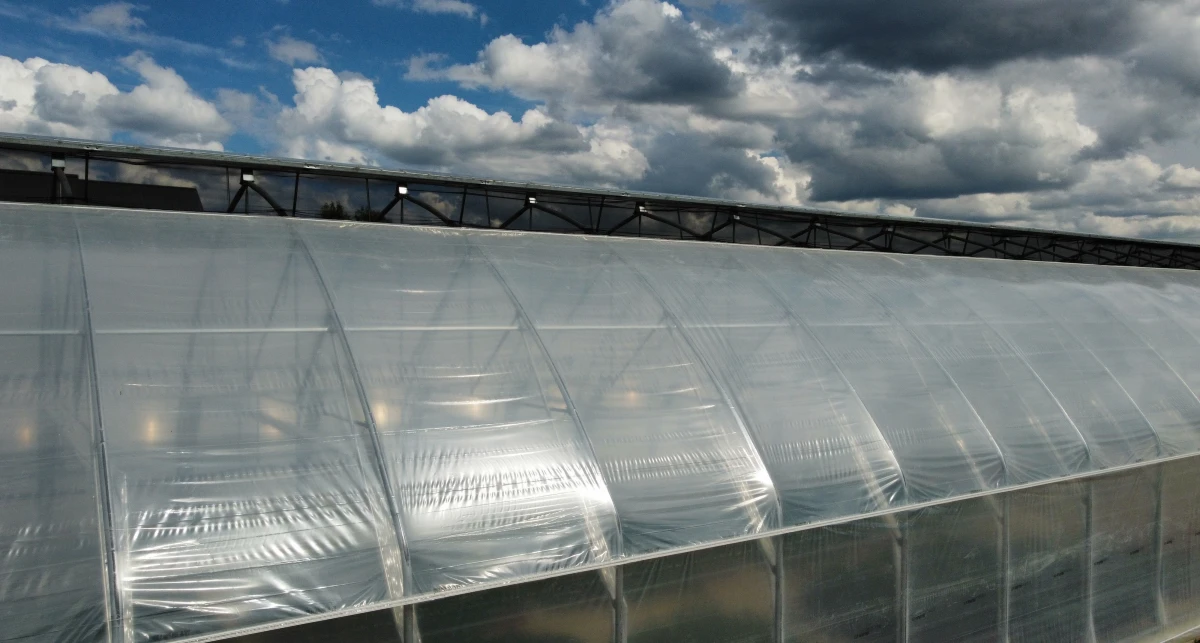
When and why should greenhouse films be changed?
Why is it important to change greenhouse films?
Greenhouse film is not only a protector against weather conditions, but also a significant factor affecting plant growth and yield. Over time, the film ages, losing its original properties. This manifests itself in the following ways:
- Reduced transparency: An aged film becomes cloudy, which limits the penetration of light into the greenhouse. The lack of light, in turn, negatively affects plant photosynthesis and growth.
- Reduced thermal insulation: Over time, the film loses its ability to retain heat in the greenhouse, which is especially important in the colder months.
- Mechanical damage: The film can be damaged by birds, rodents, storms or other factors. Damage allows pests and diseases to enter, endangering the plants.
Risks of using damaged or aged film in a greenhouse
Using damaged or aged film in a greenhouse can cause several negative risks that can significantly affect plant growth and yield. These risks include:
- Reduced yield: A damaged greenhouse film cannot provide optimal growing conditions, such as sufficient light or heat. This can lead to slower plant growth, delayed flowering and overall reduced yields.
- Plant diseases and pests: Various pests, such as aphids, thrips and fungi, can enter the film through cracks and holes, which can infect plants and cause diseases.
- Temperature fluctuations: Aged film loses its thermal insulation capacity, which can cause sharp temperature fluctuations in the greenhouse, especially at night. This can negatively affect plant growth and development.
- Moisture condensation: A damaged film can contribute to the formation of moisture condensation on plants, which can cause rot and other fungal diseases.
- Energy waste: If the greenhouse is equipped with an additional heating system, a damaged film can cause greater energy loss and increase heating costs.
To avoid these risks, it is important to regularly inspect the greenhouse film and replace it as soon as damage or signs of aging appear.
When to change the greenhouse film?
The optimal time to replace the film depends on several factors, including:
- Film type: Some films are more durable and last longer than others.
- Climatic conditions: Intense sunlight, rain, snow and temperature fluctuations accelerate the aging of the film.
- Plant type: Some plants are more sensitive to lack of light than others.
- Greenhouse usage intensity: If the greenhouse is used all year round, the film may wear out faster.
On average, a regular greenhouse film should be replaced every 3-5 years. However, if you notice that the film has become cloudy, cracks or holes have appeared, or the plants are growing slower and weaker, it is time to replace it.
How to choose the right film?
When choosing a new film, several factors should be considered:
- Transparency: The film must provide sufficient light transmission to ensure optimal plant growth.
- Thermal insulation: The film should be selected according to the climatic conditions and the plants to be grown.
- Durability: The film must be resistant to mechanical damage and UV radiation.
- Additional functions: Some films offer additional functions, such as protection against pests or improved thermal insulation.
Film thickness and its importance
The thickness of the film affects its strength, transparency and thermal insulation. The thicker the film, the more durable it is, but at the same time, the light transmission decreases. The optimal film thickness depends on the specific conditions and the plants being grown.
Regularly changing the greenhouse film is an essential factor in ensuring optimal growing conditions for plants and obtaining a rich harvest. When choosing a new film, several factors should be considered to ensure that it meets specific needs.
Types of greenhouse films
Greenhouse films are available in various types, each with its own specific properties. When choosing the most suitable film, the type of plant, climatic conditions and the purpose of using the greenhouse should be taken into account.
- Standard PE film: The most common and economical choice. Provides good light transmission, but can wear out quickly and is not particularly resistant to mechanical damage.
- Reinforced PE film: This film is reinforced with fiberglass mesh, which makes it more resistant to tears and wind.
- UV stabilized PE film: This film is more resistant to UV radiation, which helps maintain its properties for longer.
- Diffuse film: Diffuses sunlight, preventing burns on plants and providing more uniform lighting.
- Thermal film: This film improves thermal insulation, helping to maintain a more stable temperature in the greenhouse.
- Diffuse thermal film: Combines the properties of diffuse and thermal films, providing both uniform lighting and good thermal insulation.
Additional features
Many modern greenhouse films are manufactured with additional features that can improve their performance:
- Anti-condensation coating: Prevents moisture condensation on the inner surface of the film.
- Insect net: Protects plants from pests.
- Anti-dust coating: Helps keep the film cleaner and thus increases the amount of light reaching the plants.
How to choose the most suitable film:
- Plant type: Different plants require different conditions. For example, tomatoes need a lot of sunlight, while lettuce needs more shade.
- Climate: In cold climates, it is important to choose a film with good thermal insulation, but in hot climates, it is important to ensure good ventilation and shading.
- Budget: Film prices vary depending on the material, thickness and additional features.
Choosing a greenhouse film is an important decision that will affect plant growth and yield. When choosing the most suitable film, several factors must be taken into account, including the type of plant, climatic conditions and budget. Contact the specialists of SIA TERMOLAT, and we will be happy to advise you on choosing the most suitable film specifically for your needs, as well as professionally perform greenhouse film changes, as well as installation of shading and ventilation systems.